
The Ripple
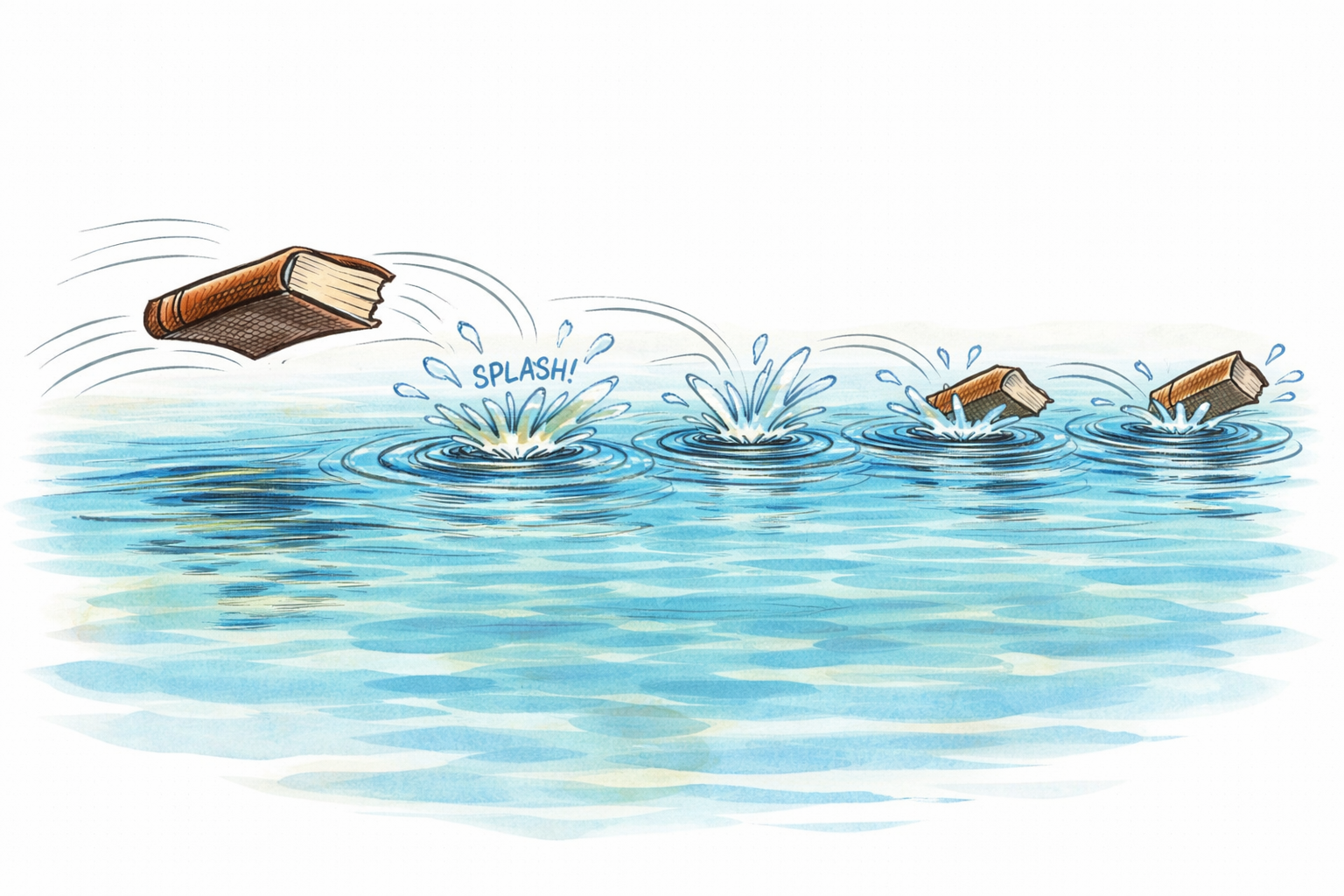
One book has five impacts. Each placement creates ripples of normality, visibility, and belonging.
The Idea Could Travel Further
A personalised book can help a child feel seen — but I began to wonder whether its impact could extend beyond the child holding it.
What if that representation also appeared in the places around them: at home, in school, in the local library and within the wider community? Shared publicly, the story could help make inclusion feel visible, accepted and normal — while local role models could reinforce the message that children like them belong and can aspire.
That idea became the Ripple Model: using one personalised story to create several connected moments of representation, encouragement and community participation. The next step is to test whether this wider model adds value through a robust pilot.
This is not charity.
It is the deliberate distribution of normalised presence.
When under-represented young people appear repeatedly and unremarkably, acceptance stops being an argument and starts becoming a default.
Repetition creates normality. Normality creates belonging.
- 50–100 students directly represented
- 4 books per student placed across schools and libraries
- Community readings hosted with local champions
- Evaluation focused on confidence, engagement, and reading motivation
Why the Ripple Model Could Work
EmpowerEd Novels combines personalised stories with trusted community spaces to reinforce belonging, visibility and aspiration.
Representation without spectacle
Difference is present, but not explained or justified. It simply belongs.
Stories first
Science and climate themes are woven into narrative, not bolted on.
Building on trusted spaces
Around two-thirds of children aged 5–15 visit a public library each year in England, while around 78% of people in England and Wales live within a 30-minute walk of one. The Ripple Model builds on places communities already know and use.
The UK has approximately 4,000 public libraries—an existing community network that could help personalised stories travel beyond the child, classroom and home.
Partners enable production, placement, community access and evaluation—and receive lasting recognition inside the books and across the programme for making that impact possible.
Become a Founding Partner